

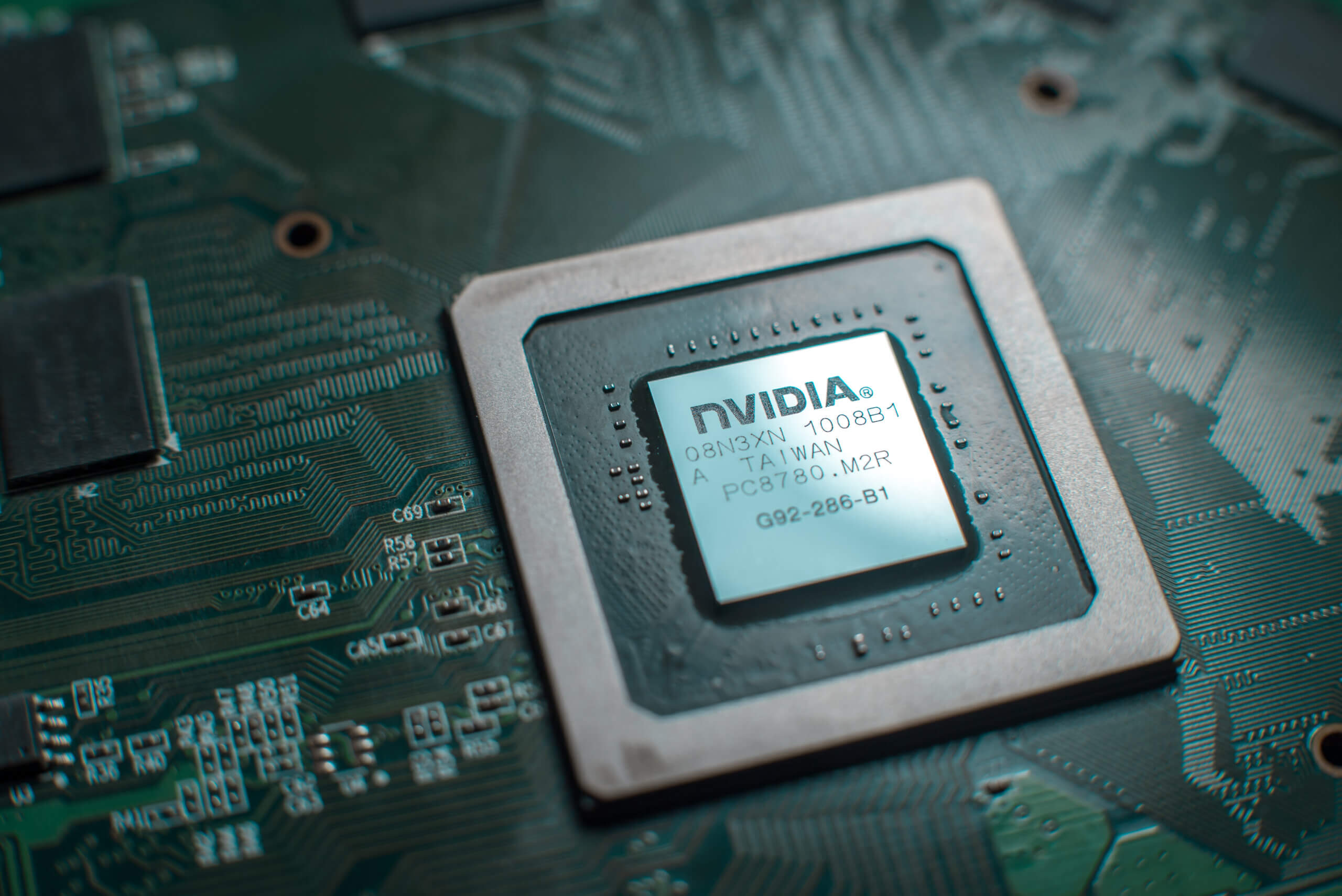
- New AI chip tracking technology bill aims to force GPS on US semiconductors.
- The bipartisan legislation moves beyond restriction to surveillance
The push for mandatory AI chip tracking technology in US-made semiconductors represents a fundamental shift from export restrictions to active surveillance, revealing just how far lawmakers are willing to go in the escalating tech war with China.
On May 15, 2025, a bipartisan group of eight House representatives introduced the Chip Security Act, requiring companies like Nvidia to embed location verification mechanisms in their AI chips before export, essentially turning every advanced semiconductor into a trackable device.
This legislative move comes just one day after the Trump administration rescinded Biden’s AI Diffusion Rule without announcing a replacement policy, creating a regulatory vacuum that Congress now seeks to fill with even more invasive measures. The timing underscores a critical transition in semiconductor policy: from controlling where chips go to monitoring where they end up.
The architecture of chip surveillance
The proposed AI chip tracking technology would fundamentally transform how semiconductors operate globally. Under the Chip Security Act, any “covered integrated circuit product”—including those classified under Export Control Classification Numbers 3A090, 3A001.z, 4A090, and 4A003.z—must include location verification capabilities before export, reexport, or in-country transfer to foreign nations.
Representative Bill Huizenga, the Michigan Republican who introduced the House bill, stated that “we must employ safeguards to help ensure export controls are not being circumvented, allowing these advanced AI chips to fall into the hands of nefarious actors.”
His co-lead, Representative Bill Foster—an Illinois Democrat and former physicist who designed chips during his scientific career—added, “I know that we have the technical tools to prevent powerful AI technology from getting into the wrong hands.”
The legislation goes beyond simple location tracking. Companies would be required to report any credible information about chip diversion, including location changes, unauthorised users, or tampering attempts. This creates an ongoing surveillance obligation that extends far beyond the point of sale, fundamentally altering the relationship between manufacturers and their products.
Bipartisan consensus on technological control
Perhaps most striking is the bipartisan nature of this AI chip tracking technology initiative. The bill enjoys support across party lines, co-led by House Select Committee on China Chairman John Moolenaar and Ranking Member Raja Krishnamoorthi. Other cosponsors include Representatives Ted Lieu, Rick Crawford, Josh Gottheimer, and Darin LaHood.
Moolenaar emphasised that “the Chinese Communist Party has exploited weaknesses in our export control enforcement system—using shell companies and smuggling networks to divert sensitive US technology.” This bipartisan consensus reflects how deeply the China challenge has penetrated American political thinking, transcending traditional partisan divides.
The Senate has already introduced similar legislation through Senator Tom Cotton, suggesting that AI chip tracking technology has broad congressional support. This coordination between chambers indicates that the surveillance approach may become law regardless of which party controls Congress.
The surveillance state meets Silicon Valley
This AI chip tracking technology proposal represents an unprecedented fusion of national security concerns with commercial technology products. Unlike traditional export controls that simply restrict destinations, this approach creates ongoing monitoring obligations that blur the lines between private commerce and state surveillance.
Representative Foster’s background as a physicist lends technical credibility to the initiative, but it also highlights how scientific expertise is increasingly enlisted in geopolitical competition. The bill reflects a belief that technical solutions can solve political problems—that embedding surveillance capabilities in semiconductors can prevent their misuse.
Yet this approach raises fundamental questions about the nature of technology export. Should every advanced semiconductor become a potential surveillance device? How will this affect innovation in countries that rely on US chips? What precedent does this set for other nations seeking to control technology flows?
Global implications and unintended consequences
The mandatory AI chip tracking technology requirement could accelerate the development of alternative semiconductor ecosystems. If US chips come with built-in surveillance, countries may intensify efforts to develop domestic alternatives or source from suppliers without such requirements.
China, already investing heavily in semiconductor self-sufficiency following years of US restrictions, may view these surveillance requirements as further justification for technological decoupling. The irony is palpable: efforts to track Chinese use of US chips may ultimately reduce their appeal and market share.
Meanwhile, allied nations may question whether they want their critical infrastructure dependent on chips that can be monitored by the US government. The legislation’s broad language suggests that AI chip tracking technology would apply to all foreign countries, not just adversaries.
The future of semiconductor governance
As the Trump administration continues to formulate its replacement for Biden’s AI Diffusion Rule, Congress appears unwilling to wait. The Chip Security Act represents a more aggressive approach than traditional export controls, moving from restriction to active surveillance.
This evolution reflects deeper changes in how nations view technology exports in an era of great power competition. The semiconductor industry, once governed primarily by market forces and technical standards, increasingly operates under geopolitical imperatives that prioritise control over commerce.
Whether AI chip tracking technology becomes law depends on congressional action and industry response. But thebipartisan support suggests that some form of semiconductor surveillance may be inevitable, marking a new chapter in the relationship between technology, commerce, and national security.
The question is no longer whether the US will control technology exports, but how extensively it will monitor them after they leave American shores. In this new paradigm, every chip becomes a potential intelligence asset, and every export a data point in a global surveillance network.
The semiconductor industry now faces a choice: adapt to a future where products carry their tracking systems, or risk being excluded from the US market entirely. As Congress pushes for mandatory AI chip tracking technology, the age of anonymous semiconductors may be coming to an end.




