


- CEO and cofounder of Nvidia Jensen Huang shared his philosophy on success at Stanford University last week.
- This week, he delivered the keynote at Nvidia GTC 2024.
- The secret to chip manufacturing success isn’t intelligence, apparently.
Sure, it’s fun to imagine AI as an amorphous, all-knowing thing that projects answers into your computer screen – a handy idol, false though it may be.
The success of the technology is wholly dependent on a scale of computation that was unimaginable until recent years. The development and deployment of AI at scale relies on AI chips that are tailor-made to perform the calculations that make AI work.
Since AI is in high demand, suppliers of the crucial hardware are making an absolute killing. Heading the pack is Nvidia, the chip manufacturer that accounts for 80% of global chip sales. The company is also at the vanguard of training generative AI models: Nvidia’s chips are behind ChatGPT and other chatbots, as well as AI-powered facial and speech recognition.
Demand for AI chips far outpaces supply, but being the best means many are willing to wait.
“Customers will wait 18 months to buy an Nvidia system rather than buy an available, off-the-shelf chip from either a start-up or another competitor,” Daniel Newman, an analyst at Futurum Group, said in an interview with The New York Times. “It’s incredible.”
If it’s a breakthrough for artificial intelligence, you can assume Nvidia’s hardware is involved. Tech giants like Google and Meta have had their own crack at manufacturing but are no match for Nvidia.
In fact, the company’s market cap is doing the unthinkable and approaching that of Apple. A major difference? Nvidia’s CEO and cofounder is far from the household-name-status that Steve Jobs and Tim Cook have.
So who is Jensen Huang?
Last week, the CEO gave a talk at Stanford University, purporting to share the secret of his success – “pain and suffering.”
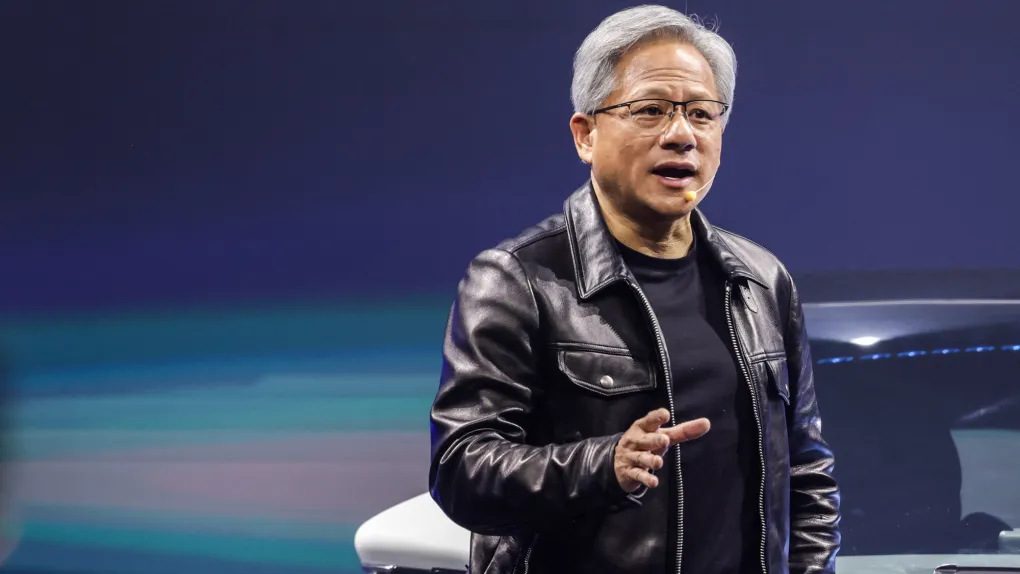
The immense power that Huang holds as one of the most influential players in artificial intelligence, with an estimated net worth of $77.2 billion, is all down to his resilience, he says. We shouldn’t be surprised by the neoliberalism, really.
Three years after it was founded in 1993, Nvidia was close to going out of business. According to Huang, that struggle in the early days forced him to be more aware of market shifts and consumer demand.
Luckily, that meant doubling down with Nvidia on a chip model that proved to be a success. Huang told students “Greatness is not intelligence.”
“Greatness comes from character. And character isn’t formed out of smart people, it’s formed out of people who suffered.”
Everyone loves an underdog story, and Huang delivers: as a Taiwanese student at school in Kentucky, Huang faced bullying and slurs. “Back then, you just had to toughen up and move on.”
At Nvidia he lives by a philosophy of pain and low expectations. Hence, he told Stanford students that success is only forged in a crucible of pain and suffering, and that his outlook on life generally consists of low expectations.
Low expectations are what he calls one of his great advantages compared to graduates who can’t help but confront the world with high expectations. Such people have “very low resilience … Unfortunately, resilience matters in success.”
That resilience could be important once again, as Bloomberg reports that Huang’s keynote at GTC 2024 actually saw Nvidia stock fall. At the conference in the heart of Silicon Valley, he introduced Nvidia’s latest chip which is 30 times faster than its predecessor.
Along with software announcements, the company’s performance at the conference will determine whether it holds on to its huge market share.
And hey, if things go south, that pain and suffering will only lead to more success.
Looking to learn more? Explore the Upcoming AI & Big Data Expo

Want to learn more about AI and big data from industry leaders? Check out AI & Big Data Expo taking place in Amsterdam, California, and London.